
What an Immigration Consultant Actually Does and Why It Matters

People have a vague idea of what an immigration consultant does. They help you get a visa. They fill out your forms. They tell you what documents to arrange. That is roughly correct but it misses most of what actually happens in a real consultancy relationship, and it misses completely why getting this part wrong tends to be one of the most expensive mistakes a person can make in the entire immigration journey.
The immigration industry in India is one of the least regulated and most misunderstood service industries in the country. On one end of the spectrum, you have unqualified agents charging a few thousand rupees and promising guaranteed visas. On the other end, you have structured consultancies with experienced teams who genuinely understand immigration law, policy changes and application strategy. The gap between those two is not just a matter of quality. It is the difference between a visa approval and a multi-year ban from applying to Canada.
So let us actually talk about what a good immigration consultant does and why it matters in real terms.
The Work That Happens Before a Single Form Gets Filled
Most people think the immigration process starts when you start collecting documents. It does not. The most important work an immigration consultant does happens in the evaluation stage, before anything is submitted and before any commitment is made.
A proper profile evaluation looks at your age, education, work experience, language ability and the occupation you have been working in. It maps those factors against the eligibility requirements of specific immigration pathways. For Canada PR under the Federal Skilled Worker Program, this means checking whether your profile scores the minimum 67 points required to create an Express Entry profile and then estimating where your CRS score is likely to fall in the current draw pool. These are two completely different things and most people confuse them. Qualifying to enter the pool is the first threshold. Getting a competitive enough CRS score to actually receive an Invitation to Apply is the second one and it requires a different kind of planning.
A good consultant will also check your NOC code, which is the National Occupation Classification code assigned to your job role by the Canadian government. This matters because two people with the same job title can have very different NOC codes depending on their actual duties, and the wrong NOC code can make an otherwise strong application invalid. Errors at this stage are not minor. They can disqualify an entire application even after it has been submitted.
Beyond eligibility, a good consultant also identifies what can be improved before a profile is submitted. An IELTS score that is one band short of CLB 9 costs a candidate roughly 50 to 70 CRS points. That gap can mean waiting years for a draw cutoff to come down versus receiving an ITA in the next available draw. Knowing this before submitting and taking 8 weeks to retake the test is the kind of advice that changes outcomes in ways that no amount of paperwork management can compensate for.
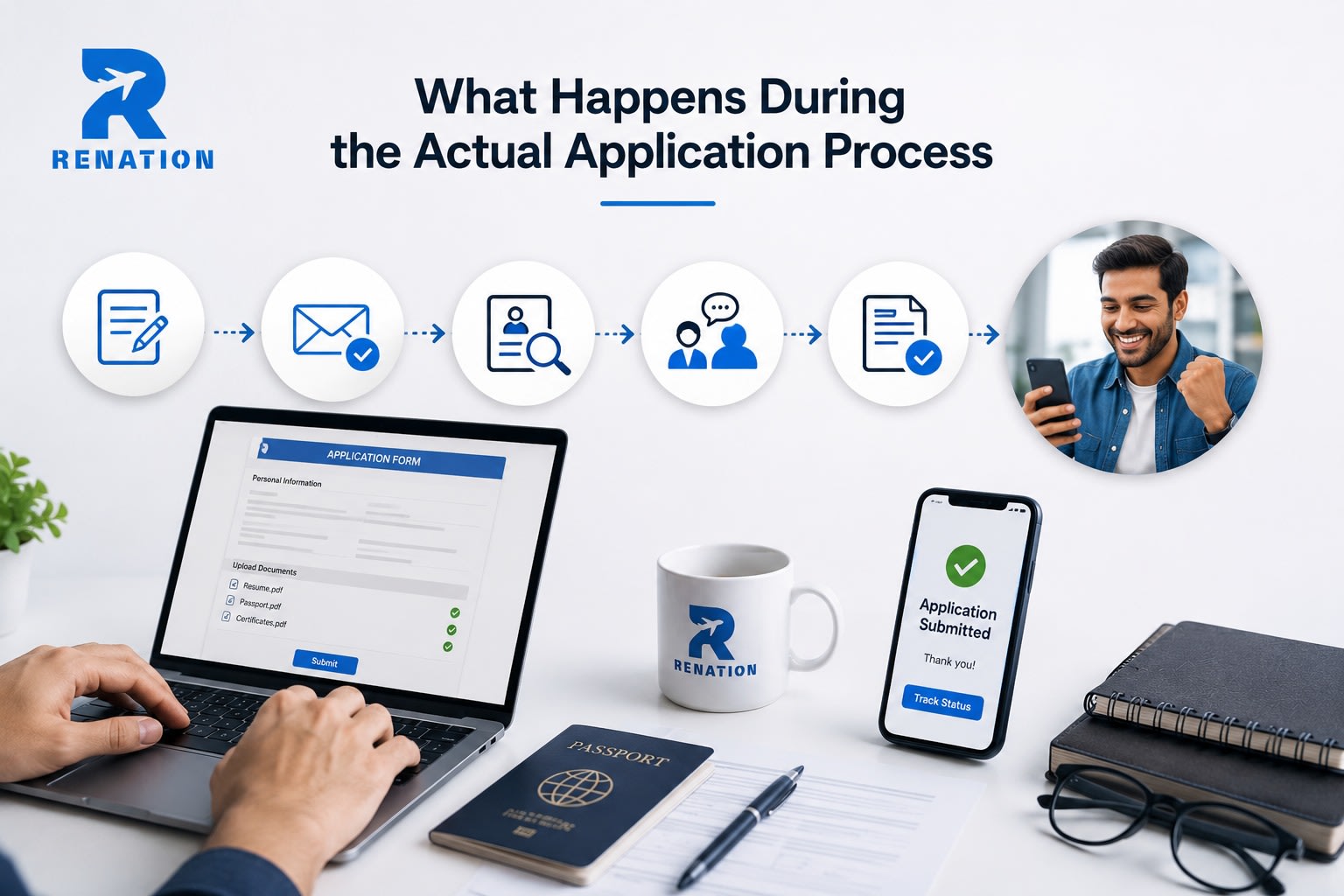
What Happens During the Actual Application Process
Once the evaluation is done and the pathway is clear, the role of an immigration consultant shifts into document management, application strategy and communication with the relevant immigration authority.
The visa application process for Canada PR involves a significant number of moving parts. The ECA from WES to verify your educational credentials. Your IELTS result converted into CLB scores. Your Express Entry profile is created with accurate information. The job history is documented in a specific format. References and experience letters drafted to meet IRCC's standards. All of this has to be correct and consistent. A single inconsistency between what is stated in the profile and what is in the supporting documents can trigger a request for further information or in more serious cases a refusal with a finding of misrepresentation, which carries consequences far more serious than just a rejected application.
An experienced consultant manages this process as a whole, not as individual tasks. They know which documents to request first because of processing times. They know how to write an employer letter or a reference document that satisfies what IRCC is looking for. They know which supporting documents to include proactively and which to leave out because including them unnecessarily can raise questions.
The Canada PR application process also involves coordination with external bodies. WES processing has its own timeline. IELTS appointments have their own booking windows. Police clearance certificates have different timelines depending on which country issued them. Biometrics need to be completed within a specific window after an ITA is received. A consultant tracks all of these simultaneously and makes sure nothing expires or gets out of sequence. If an IELTS result is valid for 2 years and you wait too long after taking the test to submit your profile, you may need to retake it. These are practical consequences of poor timeline management and they add real cost and delay.
Beyond documents, a consultant also prepares clients for what happens after submission. What does an IRCC request for additional documents mean and how should it be responded to. What triggers a flag during processing and how can it be addressed proactively. What is the timeline for medical exams and biometrics and when exactly do these need to happen relative to the overall application window. These questions have specific answers and knowing them in advance avoids panic and mistakes when the situation arises.
Why This Matters More Than Most People Realise and How to Tell a Good Consultant from a Bad One
The immigration fraud India problem is real and it is large. Searches for terms related to fake immigration consultants in India reportedly rose 64% in 2025 alone. Every year thousands of families pay lakhs to unregistered agents who either take the money and do nothing or worse submit fraudulent applications on their behalf. When a fraudulent application is detected by IRCC the consequences fall entirely on the applicant not the consultant. A misrepresentation finding can result in a ban from applying to Canada for five years. In serious cases it can be permanent.
This is why the question of who you hire matters as much as whether you hire someone.
Here are the things that separate a trustworthy immigration consultancy from one that should be avoided:
A legitimate consultant does not guarantee visa approvals. Visa decisions are made by IRCC and no consultant regardless of experience or connections can control that outcome. Anyone who promises a guaranteed result in exchange for a fee is either lying or planning to submit fraudulent documents on your behalf.
A legitimate consultant provides a written service agreement before taking any payment. This agreement should spell out exactly what services are included, what the fees are, what the timeline looks like and what happens in the event of a refusal. If there is no written agreement there is no accountability.
A legitimate consultant charges fees that reflect the actual cost of professional service. If someone is offering Canada PR processing for Rs 15,000 total, they do not have the resources, the team or the knowledge to actually do the work properly. Underpriced services in the immigration space are almost always a signal of either incompetence or fraud.
A legitimate consultant will tell you honestly if your profile does not qualify. The answer "you are not eligible right now but here is what would change that" is a sign of someone who is actually looking out for your interests. The answer "yes we can get you a visa, just pay us" regardless of profile strength is not.
The reason professional immigration guidance matters so much is that the stakes are genuinely high. This is not a product you are buying. It is a process that determines where you live, where your children go to school and what your financial future looks like. Getting it wrong does not just mean a delayed application. It can mean a multi-year setback or a permanent mark on your immigration record.

Conclusion
At Renation Advisors we start every client relationship with a Technical Evaluation Report that gives you a clear, honest picture of where your profile stands before any money changes hands for the main service. We tell you whether you qualify, what your CRS looks like, what can be improved and what the realistic timeline is. If the profile needs work before it is ready, we say that clearly rather than take your money and figure it out later. Our service agreement is provided on stamp paper and every stage of the process has a clear deliverable attached to it. If you are at the stage where you are trying to figure out whether your profile has a real shot at Canada PR and what working with a structured consultancy actually looks like, we would be glad to start that conversation with you.
Leave a Comment
Your email address will not be published. Required fields are marked *