
Canada Study Visa 2026: Eligibility, Requirements, Fees & Application Process | Renation Advisors
Canada Study Visa: A Complete Guide for Indian Students (2026)
If you've been dreaming of studying abroad, chances are Canada has crossed your mind at least once. And honestly, it's not hard to see why. Between world-class universities, tuition fees that won't completely drain your savings, a genuinely multicultural vibe, and solid career prospects afterward, Canada has quietly become one of the top choices for students everywhere — especially from India.
Every year, thousands of Indian students pack their bags for Canada to pursue everything from undergraduate degrees to postgraduate diplomas and research programs. But before any of that can happen, there's one crucial hurdle to clear: the Canada Study Visa.
This guide walks you through everything you need to know before applying in 2026 — no jargon, no fluff, just the stuff that actually matters.
Why Do So Many Students Choose Canada?
There's no single reason — it's really a combination of things that make Canada stand out:
- Globally recognized universities
- Tuition fees that are relatively affordable
- Genuinely high-quality education
- A safe, welcoming, multicultural environment
- The ability to work while studying
- A Post-Graduation Work Permit (PGWP) once you're done
- Real pathways to Permanent Residency (PR)
- Strong, high-paying career options
- Scholarships open to international students
- Reliable healthcare and public infrastructure
So, What Exactly Is a Canada Study Visa?
Officially, it's called a Study Permit — a document issued by the Government of Canada that lets you study at a Designated Learning Institution (DLI).
Alongside this, most international students also need a Temporary Resident Visa (TRV) or an Electronic Travel Authorization (eTA), depending on which country they're from.
Here's the good part: your Study Permit stays valid for your entire academic program, and often for a bit longer after you graduate too.
What Do You Actually Get Out of It?
1. Education That's Actually World-Class
Canadian universities regularly rank among the best globally — this isn't just marketing talk.
2. You Can Work While You Study
You're allowed to work a set number of hours during the academic term, and full-time during scheduled breaks — of course, this depends on current immigration rules at the time.
3. It's Easier on the Wallet
Compare Canada to the US or UK, and you'll often find a better balance between what you pay and what you actually get in terms of education quality.
4. The Post-Graduation Work Permit (PGWP)
Once you finish an eligible program, you could qualify for a PGWP, letting you gain real, valuable Canadian work experience.
5. A Real Shot at Permanent Residency
Your Canadian degree combined with local work experience can genuinely improve your eligibility for various PR pathways.
6. It's a Safe Place to Live
Canada consistently ranks as one of the safest countries in the world — a big relief for students and parents alike.
7. Quality of Life That's Hard to Beat
Clean cities, reliable transport, and communities from all over the world — it's an easy place to settle into.
Am I Eligible for a Canada Study Visa?
Generally, you'll need:
- A Letter of Acceptance (LOA) from a DLI
- A valid passport
- Proof you can financially support yourself
- Academic transcripts
- English proficiency scores (IELTS/PTE/TOEFL, depending on what your institution accepts)
- A medical exam, if required
- Police clearance, if applicable
- A genuine intention to actually study (not just a way to move abroad)
- A strong Statement of Purpose (SOP)
Documents You'll Need to Gather
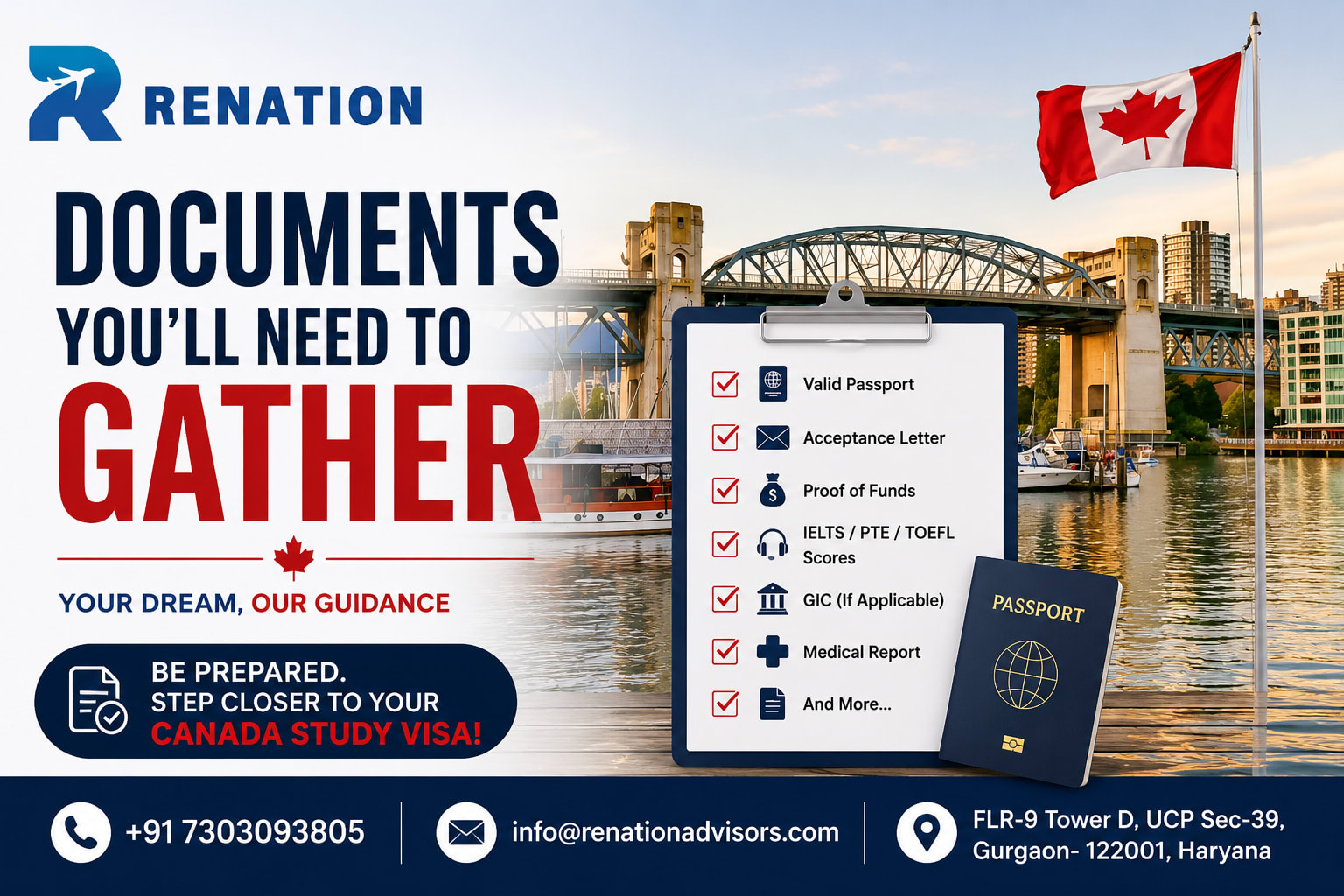
Here's your checklist:
- Valid passport
- Acceptance letter
- Educational certificates
- Mark sheets
- IELTS/PTE/TOEFL scores
- Passport-sized photographs
- Proof of funds
- GIC (Guaranteed Investment Certificate), if applicable
- Medical examination report
- Statement of Purpose
- Resume/CV
- Tuition fee receipt
- Visa application forms
- Biometrics
Yes, it's a long list — but staying organized here saves you a lot of stress later.
Let's Talk Money: Financial Requirements
You'll need to show you can cover:
- Tuition fees
- Living expenses
- Travel costs
- Accommodation
- Books and study materials
Acceptable proof of funds usually includes:
- Bank statements
- Education loan approval letters
- Sponsor documents
- Income Tax Returns
- Fixed deposits
- Scholarship letters
Do I Need IELTS for a Canada Study Visa?
Most Canadian institutions accept one of these English proficiency tests:
- IELTS Academic
- PTE Academic
- TOEFL iBT
- Other approved tests, depending on your institution
Requirements vary from one program to another, but generally, a stronger score works in your favor during admissions.
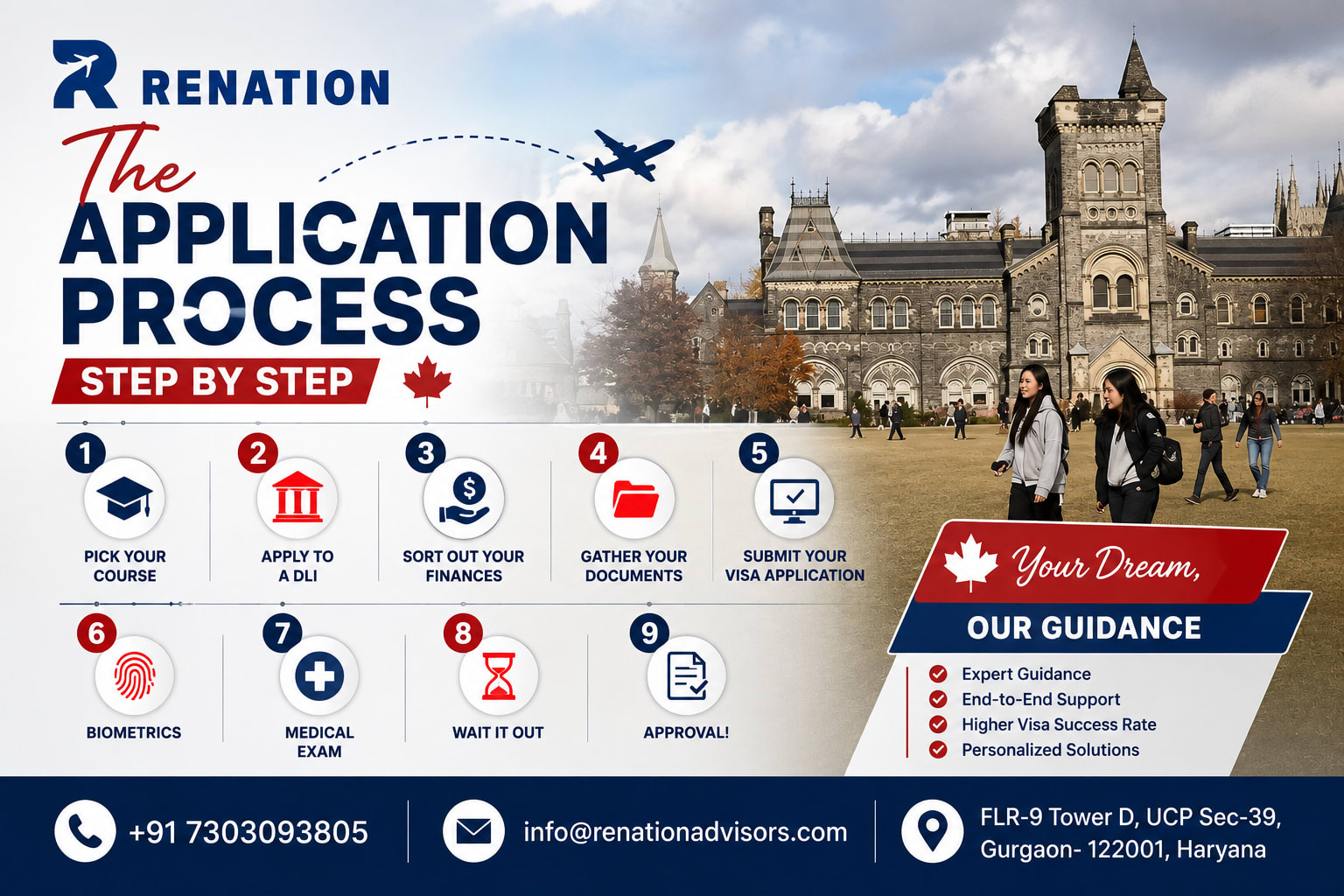
The Application Process, Step by Step
Step 1: Pick Your Course
Choose something that actually fits your academic background and where you see your career going.
Step 2: Apply to a DLI
Once accepted, you'll get your Letter of Acceptance.
Step 3: Sort Out Your Finances
Get your tuition and financial documents in order early.
Step 4: Gather Your Documents
Collect everything — academic and personal.
Step 5: Submit Your Visa Application
Complete the online Study Permit application.
Step 6: Biometrics
Head to a Visa Application Centre to get this done.
Step 7: Medical Exam
Complete this if it's required for your case.
Step 8: Wait It Out
Processing times vary, so patience helps here.
Step 9: Approval!
Once you're approved, it's time to start planning your move.
Popular Courses Students Are Choosing
- Artificial Intelligence
- Data Science
- Computer Science
- Cyber Security
- Business Management
- MBA
- Engineering
- Nursing
- Healthcare
- Hospitality Management
- Accounting
- Finance
- Digital Marketing
- Supply Chain Management
- Construction Management
- Biotechnology
Some of Canada's Top Universities
- University of Toronto
- University of British Columbia
- McGill University
- University of Alberta
- McMaster University
- University of Waterloo
- Western University
- University of Calgary
- Simon Fraser University
- York University
What's It Actually Going to Cost?
This really depends on your university, course, and the city you're in. The main expenses to plan for:
- Tuition fees
- Accommodation
- Food
- Transportation
- Health insurance
- Books
- Personal expenses
Build a realistic budget before you apply — it'll save you a lot of financial stress down the line.
Scholarships Worth Looking Into
- University scholarships
- Merit-based scholarships
- Entrance scholarships
- Government scholarships
- Research grants
- Provincial scholarships
A good scholarship can genuinely take a big chunk out of your total costs.
Can You Actually Work While Studying?
Yes — eligible international students can work during their studies, subject to current Canadian immigration rules. It's a great way to gain hands-on experience, cover some living costs, and start building your professional network early.
What About After Graduation? The PGWP
Once you complete an eligible program, you may qualify for a Post-Graduation Work Permit, which lets you build genuine Canadian work experience — something that carries a lot of weight for future opportunities, including PR.
Can Studying in Canada Lead to PR?
For a lot of students, this is the real long-term goal. Canadian education, combined with skilled work experience and solid language scores, can strengthen your eligibility for various Permanent Residency immigration programs.
Why Do Study Visa Applications Get Rejected?
A few common reasons:
- Incomplete documents
- Not enough financial proof
- A weak or generic SOP
- Unclear study plans
- Poor explanation of academic gaps
- Doubts about genuine student intent
- Incorrect information anywhere in the application
- Missing paperwork
Getting expert guidance can help you avoid most of these pitfalls.
Tips to Improve Your Chances
- Apply early — don't wait till the last minute
- Pick a course that genuinely fits your goals
- Put real effort into your SOP
- Only submit genuine financial documents
- Double-check all your information for accuracy
- Meet the language requirements comfortably
- Keep every document organized and accessible
- Don't hesitate to get professional help if you're unsure
Why Students Choose Renation Advisors
At Renation Advisors, we take the guesswork out of studying abroad. Here's how we help:
- Free profile evaluation
- University selection
- Course guidance
- Admission assistance
- Scholarship guidance
- SOP & documentation support
- Education loan assistance
- Canada Study Visa filing
- Interview preparation
- Pre-departure guidance
- End-to-end support
Our team works closely with every student, one-on-one, to make sure you're putting your best foot forward — from admission all the way to visa approval.

Frequently Asked Questions
1. What is a Canada Study Visa?
It's a Study Permit that allows international students to study at approved Canadian institutions.
2. Who's eligible for it?
Generally, anyone with admission to a Designated Learning Institution, enough financial support, and the right documentation.
3. Is IELTS compulsory for Canada?
Most institutions want proof of English proficiency, but accepted tests and score requirements vary.
4. How much money do I need to show?
Enough to cover tuition, living costs, and travel — based on current immigration guidelines.
5. Can I work while studying?
Yes, within the limits set by current Canadian immigration rules.
6. Can my spouse come with me?
Depending on current policies and your eligibility, spouses may be able to accompany you.
7. Can I get PR after studying in Canada?
Many graduates do pursue PR through eligible immigration pathways.
8. How long does the visa take to process?
It varies based on your country, application volume, and individual circumstances.
9. Which intake should I go for?
The main intakes are Fall (September), Winter (January), and Spring/Summer (May) — September usually has the widest range of programs available.
10. Why go with Renation Advisors?
Because we handle everything — university selection, admissions, documentation, visa filing, scholarships, and support even after you've landed — so the whole process feels a lot less overwhelming.
Conclusion
Canada remains one of the best places in the world for international students — thanks to its strong education system, real career opportunities, welcoming culture, and long-term settlement options. Whether you're eyeing a diploma, a bachelor's degree, or a master's program, getting your Study Permit right is the first real step toward making it happen.
With the right planning, accurate paperwork, and a bit of expert guidance, your chances of success go up significantly. And if you're ready to start this journey, Renation Advisors is here to help — from picking the right university to finally getting that Canada Study Visa in hand.
Leave a Comment
Your email address will not be published. Required fields are marked *